

How To Clean Under A Prettau Bridge
Zirkonzahn Shade Guides
Monolithic Prettau® zirconia shade guides
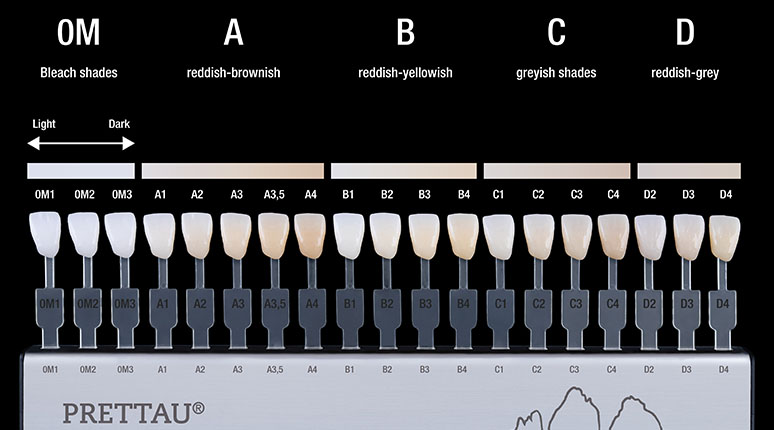
Zirkonzahn Shade Guides make up one's mind precise patient tooth shade and optimal Prettau® Dispersive® material pick with monolithic zirconia sample teeth. The colour spectrum is inspired by the VITA archetype range, comprised of 16 dentine shades (A1-D4) and 3 Bleach shades. The sample teeth are monolithic and glazed with 3D Base Glaze glaze fabric. Colour theory shows that shape and surface structure considerably influence the color effect. Striving for perfection, nosotros build our shade guides in all respective Prettau® Dispersive® zirconia materials in the shape of a premolar as well as upper and lower incisor.
One-to-i office: only if the material of the shade guide and the material of the zirconia construction are identical is information technology possible to achieve a restoration colour every bit close as possible to the patient'south natural teeth. For individualists, the shade guides in the shape of an upper incisor are also available with minimally reduced, sintered sample teeth (minimal cutback), which can exist further characterised by the awarding of different incisal materials. This results in truly unique shade guides that exactly reflect the individual approach and own aesthetic demands.
Overview of the characteristics
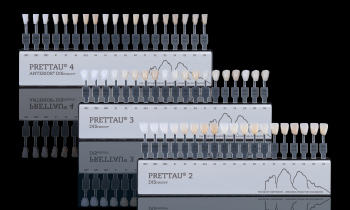 | Zirconia shade guides with monolithic sample teeth in the shape of a premolar as well as upper and lower incisor made of Prettau® two Dispersive®, Prettau® iii Dispersive®, Prettau® 4 Anterior® Dispersive® zirconia for a precise determination of the patient's tooth color. The shade guide is fabricated of the same fabric and colour every bit of the final restoration. This guarantees that the colour of the final restoration will be as close as possible to the patient's natural teeth. | |
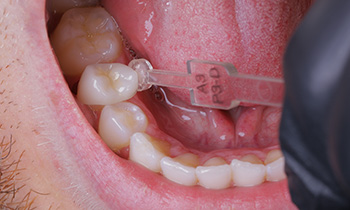 | Very authentic reproduction of the colour and translucency values of the different Dispersive® zirconia types. One-to-One Function for all monolithic zirconia restorations (veneers, crowns, bridges) | |
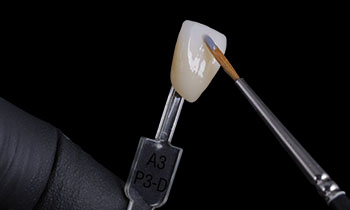 | Individual Shade Guides: Shade guides with sintered, minimally reduced sample teeth in the shape of an upper incisor (minimal curtailment) can be individually characterised | |
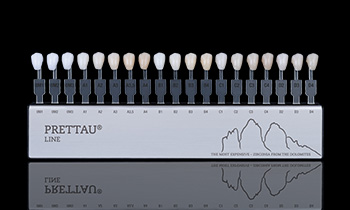 | For the dental do, we recommend using our particularly developed Zirkonzahn Shade Guide Prettau® Line in the shape of a premolar as well equally a lower and upper incisor, to identify easily the natural tooth colour. | |
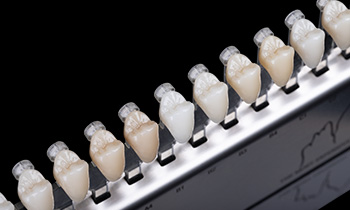 | Color spectrum: 19 colours (A1-D4 including 3 Bleach shades, inspired by the VITA colour range) | |
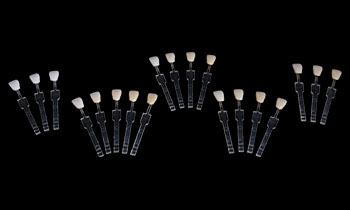 | Transparent, metal-free sample bars made of temperature-resistant plastic to avert interference caused by translucent metal (metal sample bars would polish through under the zirconia textile) | |
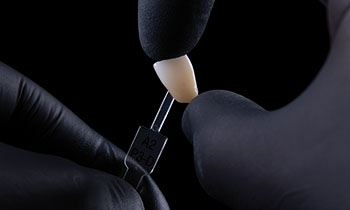 | Sample teeth tin exist placed in any position without shifting thanks to a special 360° locking mechanism | |
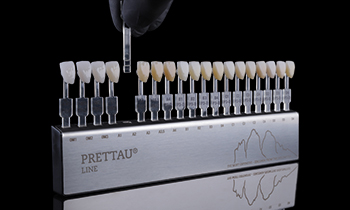 | Only practical: stainless steel holder with all of import processing information. |
Zirkonzahn Shade Guides
 |  |  |  | |||
| Zirkonzahn Shade Guide Tooth 11 | Zirkonzahn Individual Shade Guide Tooth xi | Zirkonzahn Shade Guide Tooth 31 | Zirkonzahn Shade Guide Tooth 25 | |||
| Zirconia shade guide for the upper jaw | Zirconia shade guide for the upper jaw with minimal cutback | Zirconia shade guide for the lower jaw | Zirconia shade guide for the posteriors | |||
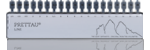 | Prettau® Line | Item number: SGAA0401 Bachelor now | Particular number: SGAA0411 Available at present | Item number: SGAA0402 Available now | Item number: SGAA0403 Available now | |
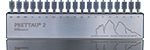 | Prettau® two Dispersive® | Detail number: SGAA0101 Available at present | Item number: SGAA0111 Available now | Item number: SGAA0102 Bachelor now | Item number: SGAA0103 Available now | |
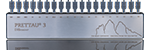 | Prettau® 3 Dispersive® | Item number: SGAA0201 Available now | Item number: SGAA0211 Available now | Item number: SGAA0202 Available at present | Item number: SGAA0203 Available now | |
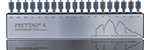 | Prettau® 4 Anterior® Dispersive® | Item number: SGAA0301 Coming before long | Item number: SGAA0311 Coming soon | Item number: SGAA0302 Coming soon | Item number: SGAA0303 Coming soon |
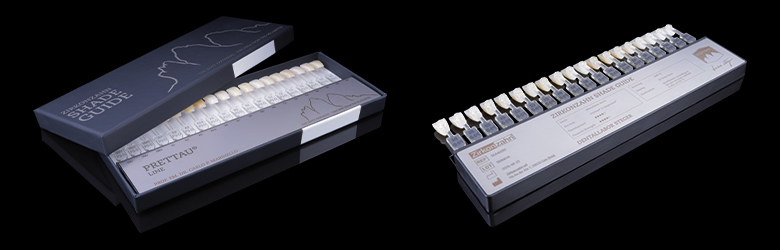
On request, the front side of the shade guides tin can be personalised with the proper noun of the dental exercise and the back with the name of the dental laboratory (at extra charge).
DOWNLOAD BROCHURE
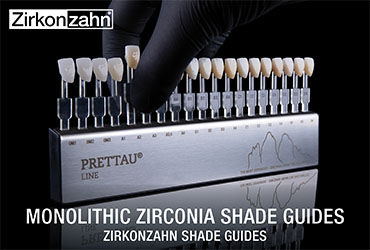 | ||||
 | Brochure Zirkonzahn Shade Guides | |||
Color spectrum
Mirror of time and lifestyle
The teeth are a mirror of a person's life and individual lifestyle. They are unlike from person to person and disposition, lived years, diet and habits of each homo shape a unique appearance of wearable patterns, degrees of translucency and colouring. The colour of a molar is formed past the combination of dentine and enamel. In youth and when the person is in healthy growth, the dentine has a uniform colour. With increasing age, discolouration occurs, which usually manifests itself equally darker areas in the dentine expanse. The overlying enamel, which is firmly bonded to the dentine, is characterised past varying degrees of opacity depending on the respective expanse - from whitish opaque to most transparent. Overall, the tooth tends to have a single shade, with a higher translucency level towards the incisal edge.
<
 | The tooth color – a complex affairThe reproduction of the natural tooth color is a very complex procedure. Factors such as tooth structure, surface structure, translucency and fluorescence properties, brightness, lite reflection and textile selection play an essential function and interweave with objective and subjective factors of colour perception. To achieve the best possible effect, it is therefore of import to command as many factors equally possible. An exact determination of the natural basic tooth colour is fundamental for the bogus reproduction. In the specialist literature* information technology is therefore recommended to always use the shade guide of the cloth that will subsequently exist used for the restoration. (* 2022: Strub, Jörg R. / Kern, Matthias / Türp, Jens Christoph / Witkowski, Siegbert / Heydecke, Guido / Wolfart, Stefan; Curriculum Prothetik, Ring II, 4., überarbeitete und erweiterte Auflage, Quintessenz Verlags-GmbH) |
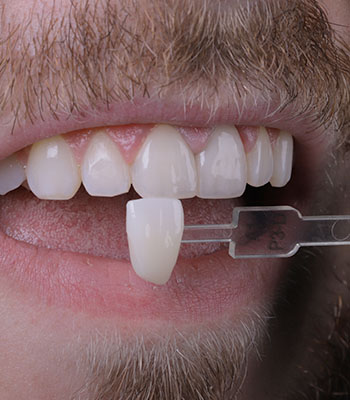 | What patients likeHomo teeth have different degrees of opacity: from quite transparent to very opaque. Cloudy, i.e. opaque, looks youthful and good for you. Particularly in the case of larger restorations, this characteristic tends to be chosen past the patient. When adapting single crowns, attention is paid to the degree of opacity, if the dentition is intact. With the different Prettau® Dispersive® zirconia types iii degrees of translucency are available. If the initial country of the teeth is relatively poor, there is a trend to deport out a reset. The beginning step is to select the right colour foundation, which in the end leads to the optimal color, and then the color variant the patient likes best is called, namely the most opaque and the brightest. |
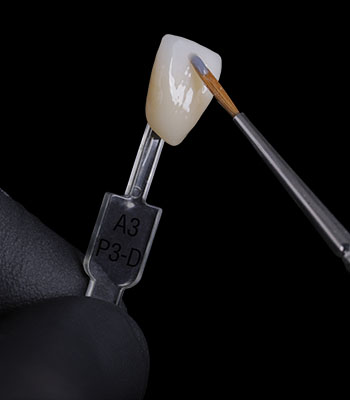 | Colour choice and individualised colour design without chippingParticularly the incisal areas of monolithic zirconia restorations can be further individualised as desired. This can be achieved past applying a coloured coat or past a minimal incisal reduction (minimal curtailment) and subsequent light ceramic veneering. Monolithic restorations fabricated in this manner completely prevent ceramic chipping (no chipping of small ceramic particles), because the ceramic applied in the incisal area according to individual interpretation and preference just fulfils artful purposes. |
>
- one
- ii
- three
Southward Tyrolean Dolomites - source of forcefulness & inspiration
The white, rugged and ancient Dolomites, unique of their kind, ascension up from the enormous primordial bounding main of Tethys 250 million years ago. Lifted with forcefulness by the hard coral reefs of the African continent, they stand proudly confronting the infinite sky, challenging all weather condition weather.
Famous today every bit a UNESCO World Natural Heritage, the Dolomites, located in South Tyrol, are a unique mountain range, an exceptional miracle in the Alps. Respected every bit a magical identify in the Stone Age, they are withal shrouded in their mystical charm. Their white colour lives on through the centuries, shining brightly in the moonlight and reverberating the glowing colours of the setting sun. This is the myth. These are the Dolomites - a source of forcefulness and timeless inspiration. Every bit unique as this natural monolith, is zirconia the dental material of selection. To imbue it with unique properties. To improve it. To get in resistant across our lifetime. To infuse luminosity and all its extraordinary attributes, gives united states, every bit producers of this noble material, inspired by our South Tyrolean homeland and scientific spirit, the unbelievably immense feeling of doing the right thing.
Tips for avoiding possible agonizing influences
- Ideally, color conclusion should exist carried out under natural daylight weather condition or in a room illuminated with standardised daylight lamps; avert straight, vivid calorie-free (approx. 2000 lux, a well-lit dental chair already has approx. 8000 lux)
- Acquit out colour determination rapidly and no longer than 5-7 s: The human eye tires quickly when looking at something with concentration. This too affects the color perception.
- Color matching in a neutral colour surround, on a patient without brand-up who is wearing neutral-coloured clothes - The perception of an intense colour influences the colour perception of another colour, which is observed immediately afterwards (simultaneous contrast), the color of the underground besides affects the perception of a color.
- Participation in a colour matching grade - When determining the patient's molar colour, the exclusion of sources of interference and the individual experience level are of considerable importance. Participation in a special grooming course can be very helpful.
Steps of tooth shade determination
- Clean natural teeth well before determining the molar colour, if necessary carry out a dental cleaning. The teeth surfaces do not have to be dried out, otherwise the teeth will appear likewise white.
- Carry out color decision with relaxed lip position, ideally under daylight atmospheric condition (slightly cloudy heaven) around ten-eleven am or 2-3 pm or under standardised daylight illumination.
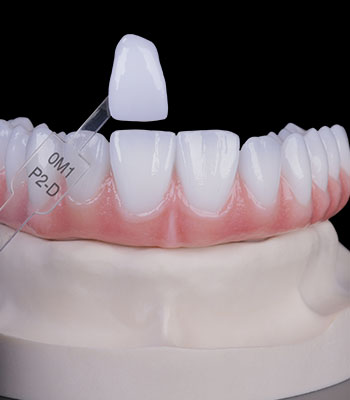
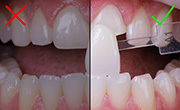
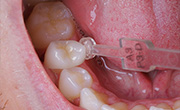
- Hold the corresponding Prettau® 2 Dispersive®, Prettau® three Dispersive® or Prettau® iv Inductive® Dispersive® shade guide at a altitude just still as close as possible next to or nether the respective natural patient tooth (molar neck to tooth neck or incisal edge to incisal edge)
- Concord the Zirkonzahn Shade Guide eleven for the upper jaw against the natural teeth to determine the natural tooth shade for a monolithic upper jaw structure to be fabricated in Prettau® Dispersive® zirconia or to check the coaction with the natural residual teeth in the upper/lower jaw or the interplay with an already made zirconia lower jaw structure.
- Hold the Zirkonzahn Shade Guide 31 for the lower jaw confronting the natural teeth to determine the natural tooth shade for a monolithic lower jaw structure to exist made in Prettau® Dispersive® zirconia or to check the interplay with the natural residuum teeth in the upper/lower jaw or the coaction with an already fabricated zirconia upper jaw structure.
- Hold the Zirkonzahn Shade Guide 25 for the posterior area against the natural teeth to decide the natural tooth shade in the posterior region and the shade upshot on the occlusal surfaces.
- Disinfect the shade guides later on use, allow to dry and store them in the supplied packaging, protected from direct sunlight.
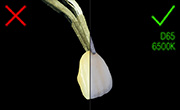
- Examination of the fabricated monolithic zirconia structures ideally in industry standard daylight D65 with a correlated colour temperature of 6500 Yard.
 |  |  |  |

Source: https://zirkonzahn.com/ca/prettau-zirconia/zirkonzahn-shade-guide
Posted by: giltweenowed.blogspot.com
0 Response to "How To Clean Under A Prettau Bridge"
Post a Comment