

Should I Remove Fish When Cleaning Tank
When people find out you lot proceed fish, they probably imagine a crusty, algae-coated tank where y'all can barely see anything pond within. Simply with just a few easy steps, yous tin proceed your aquarium looking similar a beautiful work of art. Follow along equally nosotros share our superlative tips for cleaning your fish tank like a pro.
Before Yous Become Started…
At that place are several frequently answered questions we ofttimes hear from beginners, so let's address those first:
How oft exercise you lot need to clean a fish tank?
Some people say once a week, while others say once a month. The existent answer is that it totally depends! Several factors include the size of your tank, how many fish you keep, and how much biological filtration (e.m., beneficial bacteria and live plants) you have. Fortunately, nosotros have a gratis guide to assistance y'all figure out exactly what frequency is correct for your aquarium.
Do you take the fish out of the tank when cleaning?
No, go ahead and leave your fish in the aquarium. You won't exist completely draining the aquarium, so there will exist plenty of water left for them to swim in. Also, the process of catching them is more stressful for the fish than slowly cleaning around them.
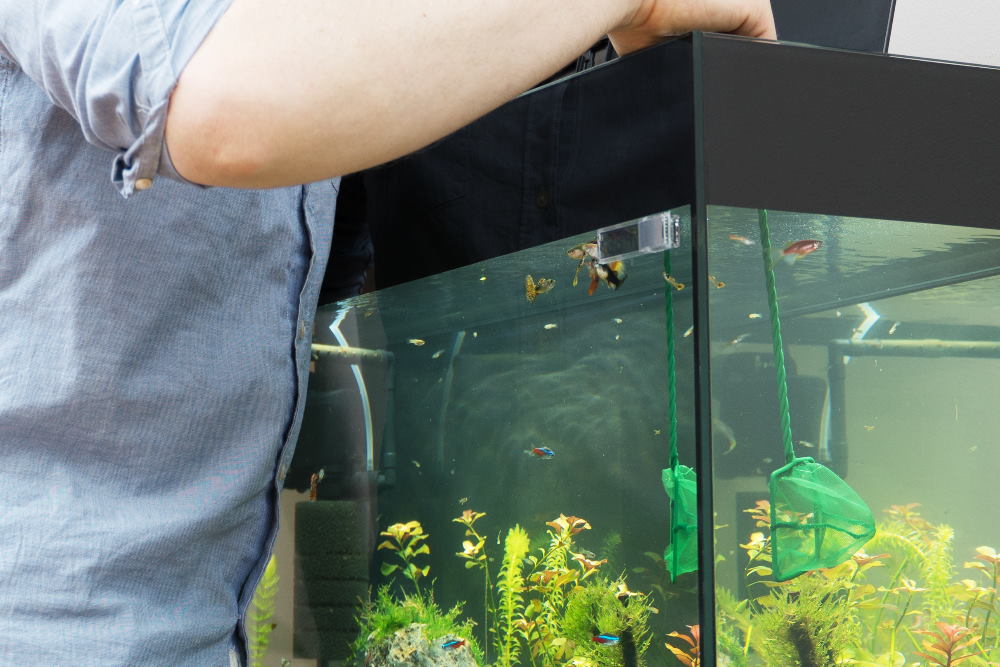
At that place's no demand to catch the fish before cleaning an aquarium because it will just cause undue stress.
How long do you let h2o sit before putting fish in?
This old school slice of communication comes from the fact that municipalities often put chlorine in tap water (which is lethal to fish), just if you allow the water sit out for 24 hours, the chlorine evaporates. Nowadays, chloramine (a more than stable form of chlorine) is often used in tap water, and it does non evaporate over time. Instead, you need to dose water conditioner to make the h2o condom for fish, then you can immediately utilise the dechlorinated water for your aquarium with no expect time.
What cleaning supplies practise you demand to get?
If this is your beginning aquarium, you may demand to collect some tank maintenance materials, such as:
- Aquarium water examination kit
- Bucket for holding dirty tank water
- Algae scraper (for glass or acrylic)
- Algae scraper blade zipper (for drinking glass or acrylic)
- Toothbrush for cleaning algae off decor or plants
- Pair of scissors for pruning plants
- Dechlorinator (also known as water conditioner)
- Glass cleaner
- Towel for wiping up h2o spills
- Glass-cleaning cloth or newspaper towel
- Aquarium siphon (also known equally a gravel vacuum)
(Equally an Amazon Associate, we earn from qualifying purchases, and commissions may be earned from the link above.)
How to Clean Your Aquarium
Now that we've cleared up some confusion about tank maintenance, here is a footstep-by-step guide for y'all to follow on a regular basis:
Step 1: Test the Water Quality
If your aquarium is newly established and has not been cycled yet, you need to examination the h2o to determine if it has 0 ppm ammonia, 0 ppm nitrites, and less than 40 ppm nitrates. (For more than info, find out how to cycle your aquarium.) Higher levels of these waste matter compounds can be dangerous for fish.
If your aquarium is already cycled, so the goal is to keep nitrate levels below 40 ppm. Measure the nitrates using a water test kit to determine how much water should be removed and if other steps demand to be taken (based on our gratuitous guide to water changes).

A water test kit helps you decide if there are toxic levels of nitrogen waste compounds in the aquarium.
Step ii: Remove Algae
In order to maintain a clear view of our fish, scrub the tank walls with an algae scraper. If yous have the blade attachment, it should be very easy to piece through any tough algae spots. Only make sure not to catch whatever substrate underneath the algae scraper, or you may end upwards scratching the glass or acrylic.
If algae has grown on the lid, you can easily rinse it off in the sink. (Don't use soap or it may impairment your fish.) Finally, if algae covers your aquarium decor, rocks, or plants, endeavour using a clean toothbrush to gently brush it off, either over the sink or in the aquarium. Read our commodity on how to get rid of algae for more than tips and tricks.
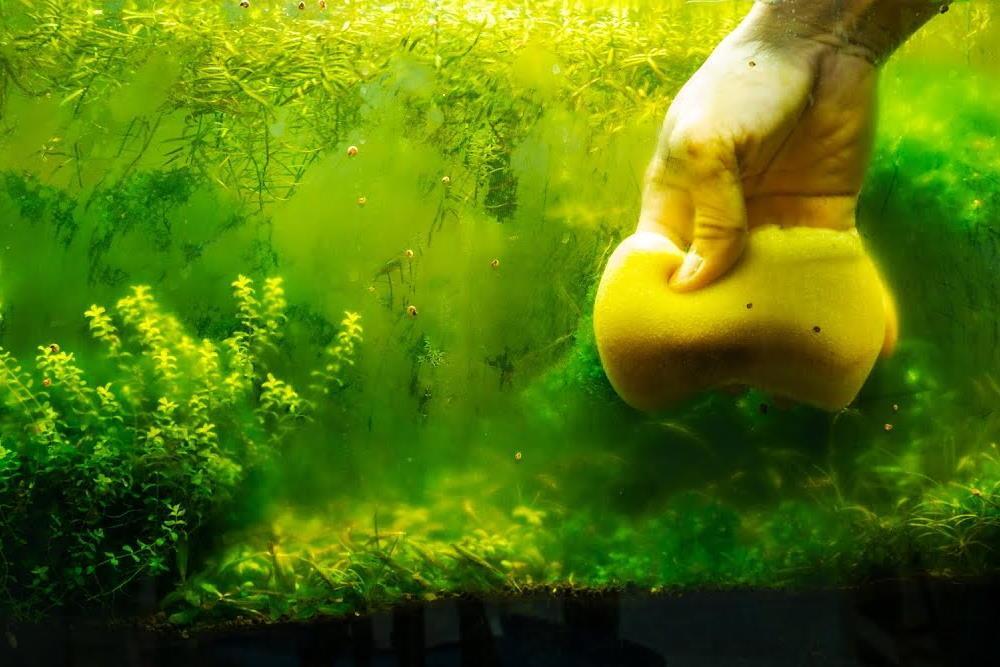
Keep algae under control past regularly removing it and balancing the lighting and nutrient levels in your aquarium.
Step 3: Prune the Plants
If y'all keep live aquarium plants, have this time to remove any dead leaves and trim downwards overgrown foliage. If you take alpine stem plants, you can easily propagate them by cutting a few inches off the tops and replanting them into the substrate. If your vallisneria or dwarf sagittaria are spreading into unwanted areas, pull out the lilliputian runners and move them elsewhere. Lastly, if floating plants have completely covered the entire water surface, remove virtually 30% to 50% of them and so that the plants below become plenty light and the fish get enough oxygen.
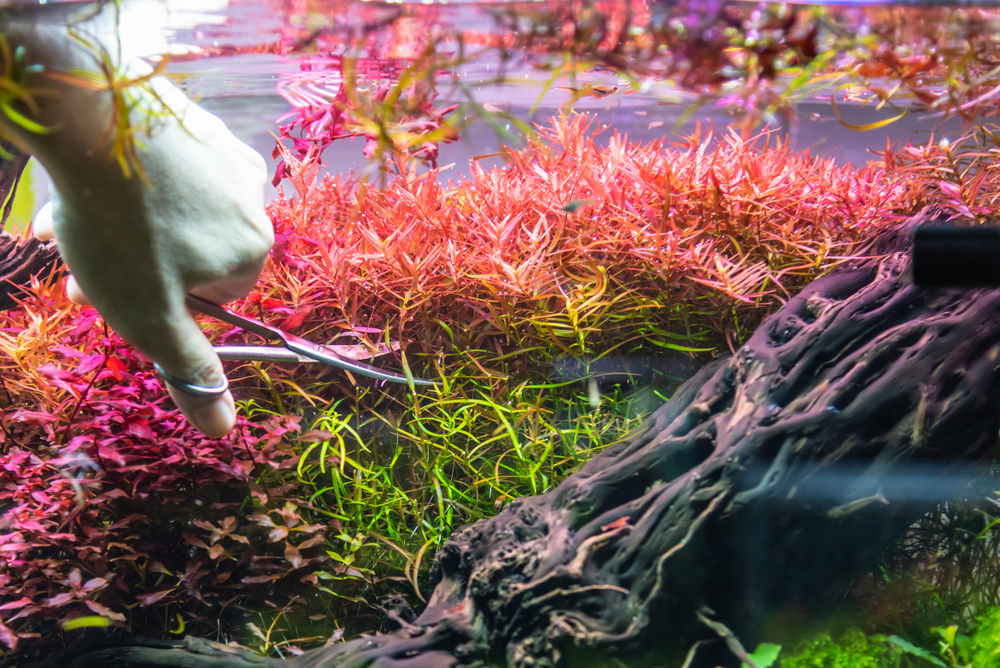
Pruning helps plants to focus on delivering nutrients to the healthiest leaves, and it as well allows light to accomplish leaves at the bottom of the stems.
Stride 4: Plow off Equipment
Before removing whatsoever water, brand sure to turn off or unplug all equipment. Aquarium heaters and filters are non meant to operate without water and therefore can become damaged when running in dry out air.
Footstep v: Vacuum the Substrate
Take out your nifty aquarium siphon and vacuum approximately 1-third of the substrate. Move any decorations or hardscape every bit needed, since debris tends to collect underneath them. The siphon serves the dual purpose of non only removing fish waste, uneaten food, and dead leaves from the gravel or sand, but also removing old tank h2o and the excess nitrates in them. Check out our gravel vacuum article for detailed instructions on how to start a siphon (and how to stop it if you accidentally suck upwardly a small fish).
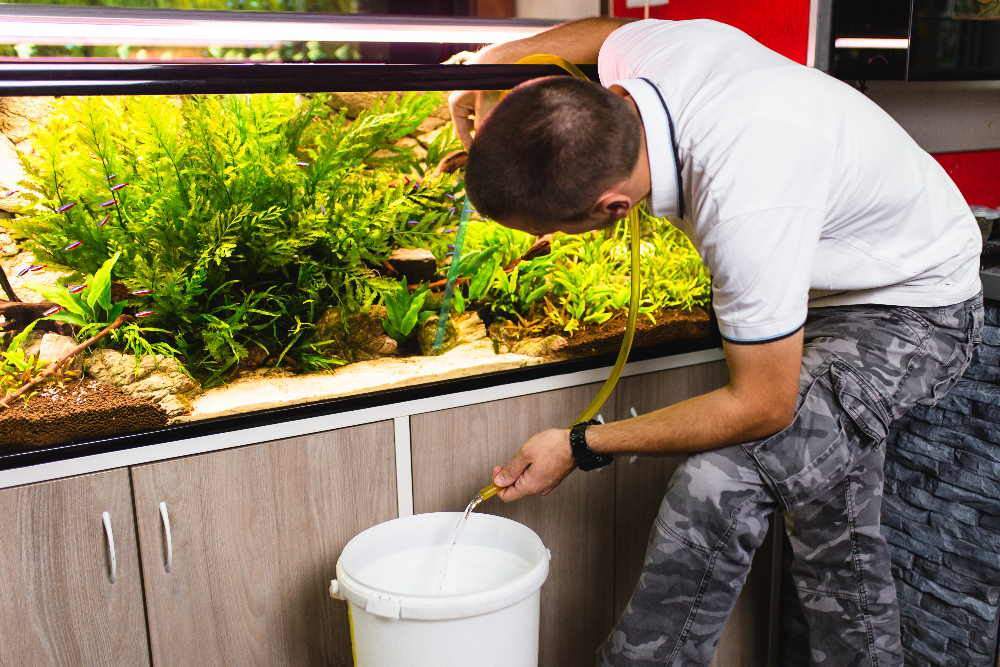
Siphons are ane of the well-nigh useful tools for hands changing water without having to apply a cup or pitcher.
Step 6: Clean the Filter
At least once a month, yous should clean the filter. Many beginners think of filters similar a black hole where fish poop and detritus magically disappear from the water. In reality, filters are more like trash cans that collect waste material, just at the end of the mean solar day, someone is nonetheless responsible for taking out the trash can. In the aforementioned way, filters collect fish waste, just you lot must still regularly clean it to remove all the gunk before the filter gets chock-full up or overflows.
If you have a hang-on-dorsum, canister, or corner box filter, the easiest mode to maintenance it is to swish around and launder the filter media in your bucket of recently removed tank water. (Over again, practise non use soap, just water.) If yous have a sponge filter, remove the foam portion and wring information technology multiple times in the saucepan of erstwhile tank water. For more details, read the last section of our sponge filter article.
Step 7: Refill the H2o
At this signal, yous can finally refill the tank with fresh, clean water that matches the temperature of the existing aquarium h2o. Man hands are able to detect temperatures within one or 2 degrees, so simply adjust the faucet until the tap water feels like it has the same amount of warmth. Empty out the bucket of old tank h2o (which tin can be used to feed indoor and outdoor plants), and refill information technology with tap h2o. You can either add together dechlorinator into the bucket (dosed based on the bucket'southward book) or directly into the tank (dosed based on the aquarium's volume). This is likewise your take chances to add liquid fertilizer and/or root tabs for the substrate.
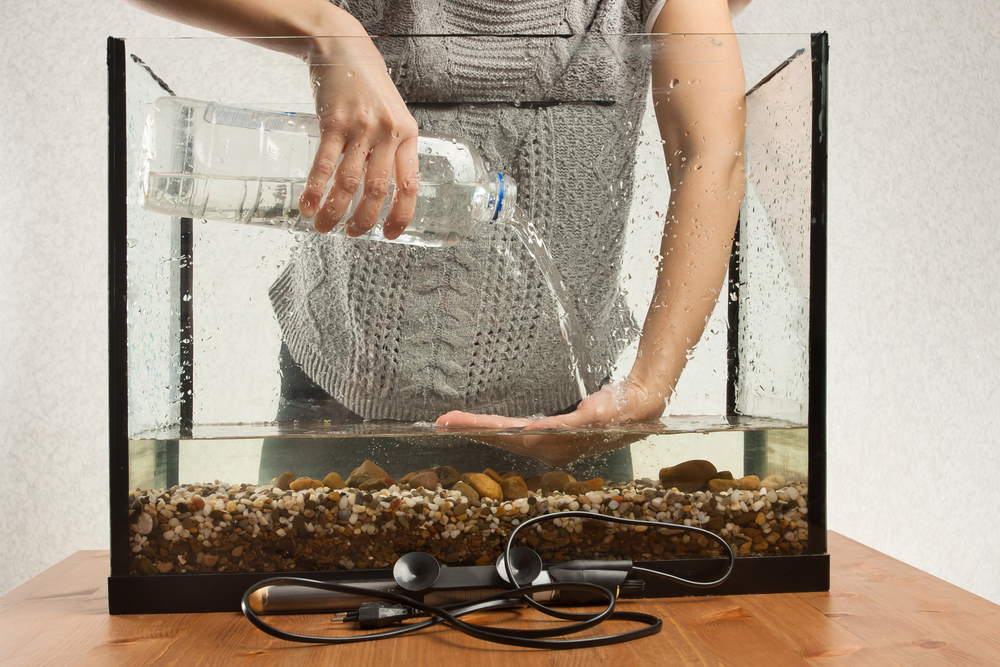
If you're worried virtually messing upward your aquascape or substrate, cascade the new water into the aquarium through a colander or onto some other solid surface (like your hand or a plastic bag) to lessen whatever disturbances.
Step eight: Turn on Equipment
Although you only spent all this time cleaning the tank, it probably looks dirtier than ever with all that particulate clouding up the water. Not to worry – plough on the heater and filter again, and inside an hr or so, the debris will settle down or get sucked up past the filter.
Step 9: Wipe the Glass
For that extra, crystal-clear finish, wipe down the exterior walls of the tank with aquarium-rubber glass and acrylic cleaner to remove any water spots and smudges. Besides, clean off the dust that has collected on the lid, light, and aquarium stand up. At present you take a truly Instagram-worthy aquarium set up to wow your friends and family unit!
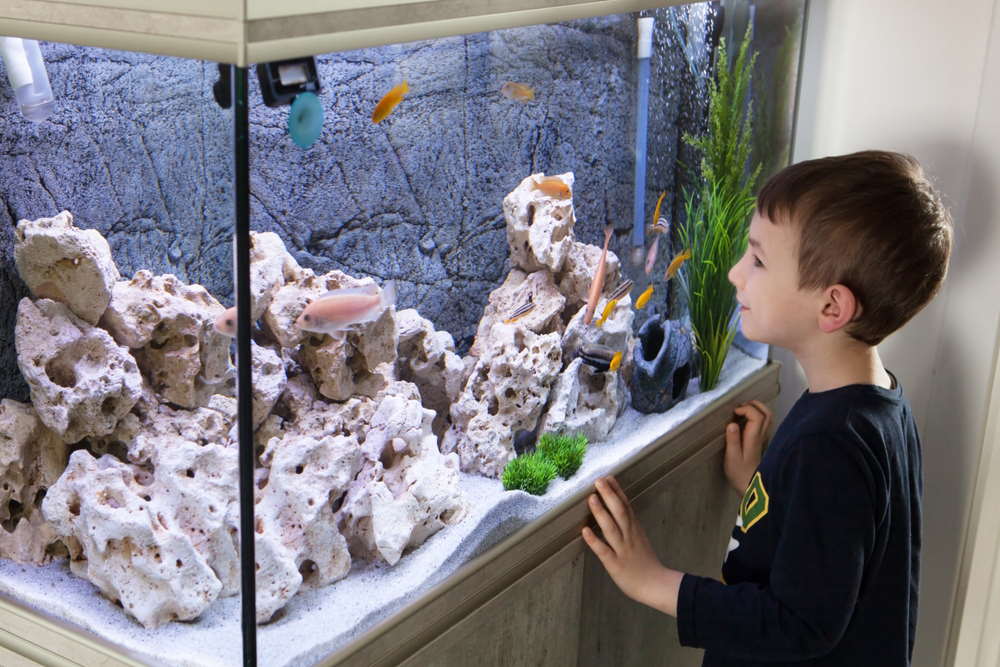
Savour the fruits of your labor past spending hours staring at your happy and good for you fish.

Source: https://www.aquariumcoop.com/blogs/aquarium/aquarium-cleaning
Posted by: giltweenowed.blogspot.com
0 Response to "Should I Remove Fish When Cleaning Tank"
Post a Comment